USB-A drives
A familiar format for training, catalogs and business distribution.
 STORFLUXRequest a Quote ↗
Define capacity, interface, finish, packaging and content preload around your market and delivery requirements.
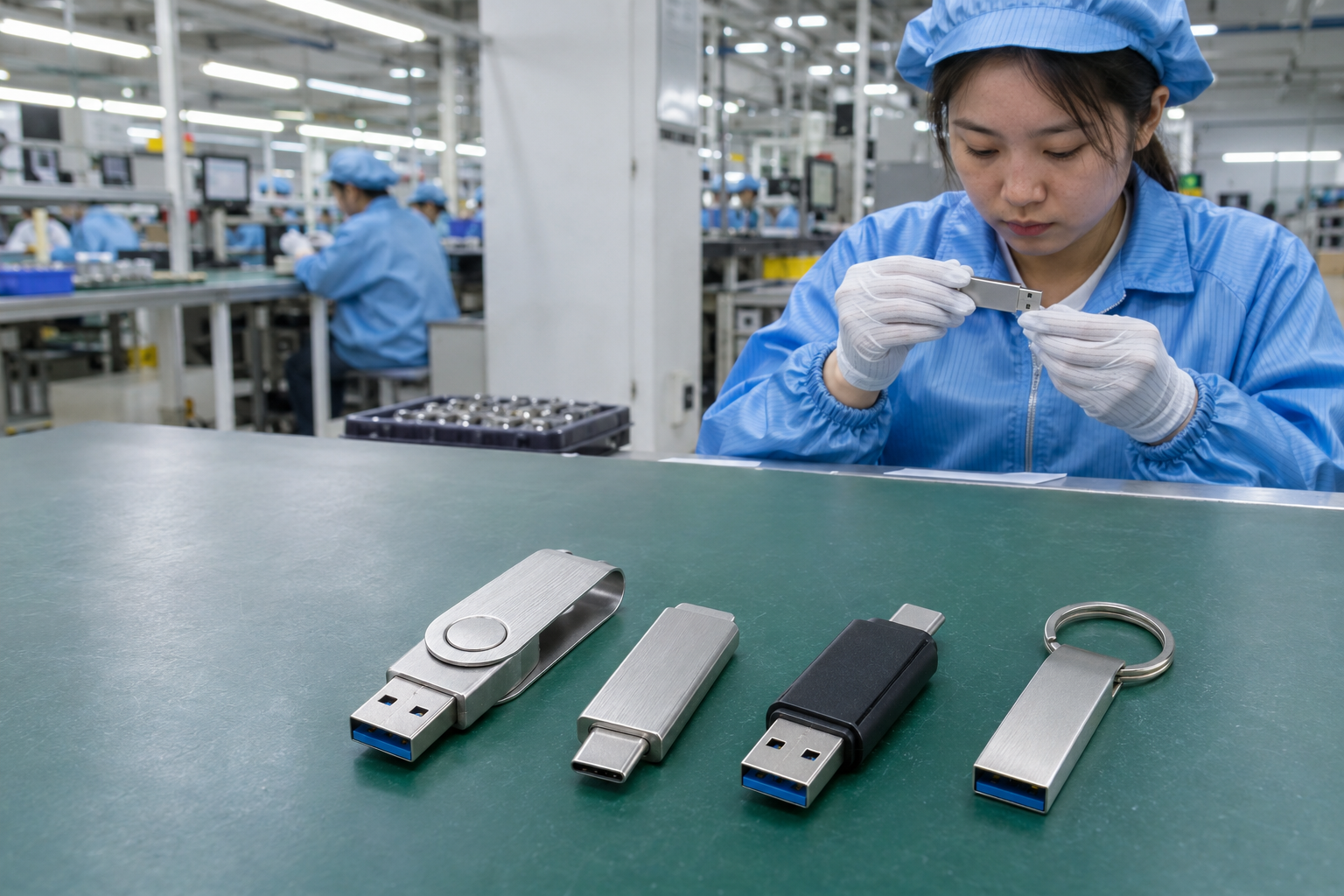
Use these fields to make quotations comparable. Final availability and acceptance criteria are confirmed for the selected configuration.
A documented sequence keeps product, artwork, testing and logistics decisions aligned.
Application, target market, quantity and commercial constraints.
Product, interface, capacity, finish and evidence requirements.
Completed product, identity, accessories, artwork and packaging.
Approved references and open issues closed before scheduling.
Agreed functional, appearance and pack-out checkpoints.
Finished quantity, cartons, documents and dispatch reference.
The approved sample should represent the drive, internal configuration, artwork, files, labels and packaging that the recipient will receive.

Each project is reviewed against the actual user, host, workflow and delivery requirement.
Practical questions to settle before sample approval and order release.
Share the target product, capacity or configuration, estimated quantity, destination market, branding or packaging needs and required delivery window. Exact feasibility is confirmed against the selected configuration.
A production-representative sample can be discussed before the order is released. The approval record should cover the product, labels, accessories, packaging and any customer-supplied content.
The inspection plan is agreed for the project and may include identity, appearance, functional checks, packing verification and quantity records. The exact method and sample scope depend on the product and risk.
Repeat programs are easier to control when the approved configuration, artwork, packaging and lot references are documented. Any proposed change should be reviewed before a later order is released.
Share the application, configuration, quantity and target market. StorFlux will reply by email with the practical next questions.
Technical guidance for specification, qualification and order planning.